Why use a Python sms gateway?
Python remains a popular language for developing web applications, automation scripts, notifications, and even SaaS solutions. For any tool or app that relies on fast, reliable messaging, integrating with an SMS gateway through Python is an essential skill. Whether you want to send marketing campaigns, two-factor authentication, transactional alerts or WhatsApp newsletters—leveraging an SMS gateway unlocks new capabilities and engagement opportunities.
Core benefits of Python sms gateway integration
- Automated notifications: Instantly alert users of account activity, reminders, or order statuses.
- Security with OTP sms: Enhance login and transaction security by sending one-time passwords directly from your Python apps.
- Marketing at scale: Broadcast bulk SMS or launch targeted sms marketing campaigns driven by your data.
- WhatsApp newsletters: Send multimedia newsletters with scripts using WhatsApp API.
- API flexibility: Utilize HTTP(s) requests, JSON, or XML—compatible with major Python HTTP libraries.
How to get started with a Python sms gateway
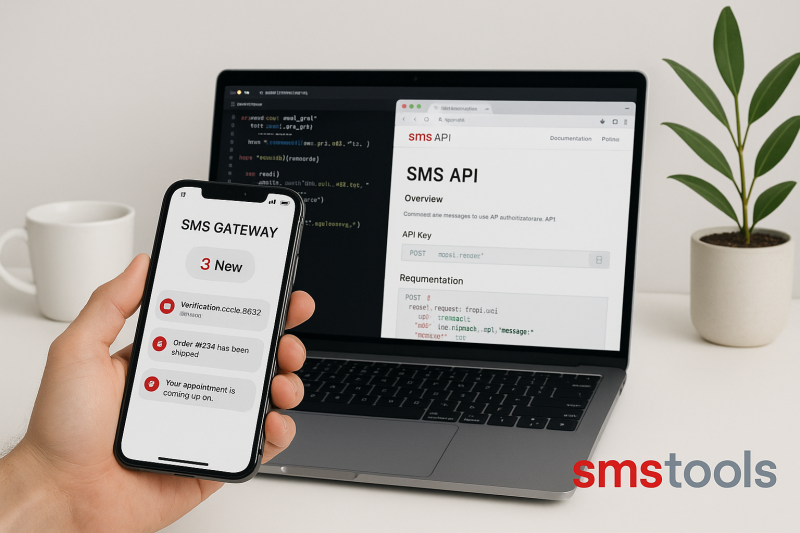
Setting up SMS or WhatsApp messaging from Python is simple with Smstools. Our platform provides a clean HTTP API, ready-to-use code samples in Python, and robust documentation. Here are the steps:
- Register for a free trial with Smstools and obtain your API credentials.
- Install Python HTTP library, such as requests (
pip install requests). - Browse our API documentation for endpoints and authentication modes.
- Use or adapt our sample Python code to send messages, check delivery, or manage contacts.
- Explore advanced features for OTP sms, dynamic senderIDs, and message scheduling.
Basic example: sending an SMS in Python
import requests

API_URL = "https://api.smstools.com/sms/send"
API_KEY = "your_api_key_here"

payload = {
  "to": "+32470123456",
  "message": "Hello from Python via Smstools!",
  "sender": "YourApp"
}
headers = {
  "Content-Type": "application/json",
  "Authorization": f"Bearer {API_KEY}"
}

response = requests.post(API_URL, json=payload, headers=headers)
print(response.json())
This template can be adapted for bulk messages or to trigger WhatsApp newsletters.
Advanced integrations and automation
Integrate messaging with tools like Make.com or Zapier. This enables Python-powered automations linked to CRMs, ecommerce platforms, or notification systems—no extra infrastructure needed. Add automated birthday greetings, feedback requests, or OTP flow for a seamless user experience.
Why choose Smstools for your Python SMS gateway?
- European reliability since 2004
- Seamless Python code samples and quick-start guides
- Comprehensive support for SMS, WhatsApp, Email to SMS, and virtual SMS numbers
- Scalable for startups and enterprises
Try Smstools with no risk: start your free trial today. Automate more, integrate further, and engage your users like never before. REGISTER →
FAQs
- Can I use Smstools with Django or Flask?
Yes, simply use the requests library within your route handlers or views. The API accepts REST calls from any Python stack. - Is there sample code for sending bulk or WhatsApp messages?
Yes, the API documentation includes ready-to-use code snippets for batch sends, newsletters, and more. - Can I receive incoming SMS in Python?
Use virtual SMS numbers or set up webhooks for automatic inbound message handling. - What about 2FA or OTP?
Easily add two-factor authentication via OTP SMS. Our guide shows you how to link with your user accounts securely.
Explore more use cases or jump to the Python API documentation to start coding today!